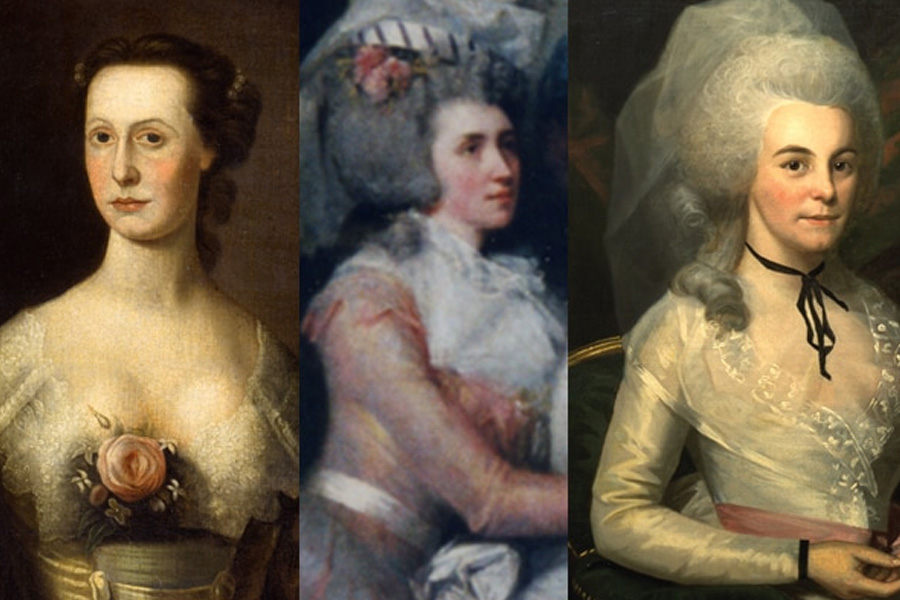
Basic Information
| Field | Details |
|---|---|
| Full Name | Catherine “Caty” Van Rensselaer Schuyler Malcolm Cochran |
| Birth | February 20, 1781, Albany, New York |
| Death | August 26, 1857, Oswego, New York |
| Parents | Maj. Gen. Philip John Schuyler (1733–1804) and Catharine Van Rensselaer Schuyler (1734–1803) |
| Godparents | George Washington, Martha Washington, James Rensselaer, Margarita Schuyler |
| Siblings (selected) | Angelica Schuyler Church (1756–1814); Elizabeth “Eliza” Schuyler Hamilton (1757–1854); Margarita “Peggy” Schuyler Van Rensselaer (1758–1801); Cornelia Schuyler Morton (1776–1810); Philip Jeremiah Schuyler (1768–1835) |
| Marriages | Samuel Bayard Malcolm (m. May 14, 1803; d. 1817); James Cochran (m. 1822; d. 1848) |
| Children | Philip Schuyler Malcolm (1804–1805); Catherine Elizabeth Malcolm (1808/1809–1810); William Schuyler Malcolm (1810–1890); Alexander Hamilton Malcolm (1815–1888) |
| Residences | Albany; Utica; Saratoga; Oswego |
| Education | Albany academies; private tutoring in New York City |
| Occupations | Gentlewoman; estate manager; postmistress of Oswego (in widowhood) |
| Religion | Reformed Dutch Church; baptized March 4, 1781 |
| Known For | Youngest Schuyler child; “godchild of Washington”; gifted pianist; family historian |
| Burial | Oswego, New York |
A Youngest Daughter in a House of Giants
Catherine “Caty” Schuyler was born into a household where war maps and ledger books lay side by side, where patriot strategy brushed elbows with patroon tradition. The fifteenth child—and eighth to survive—of Philip and Catharine Schuyler, she arrived in winter’s final grip on February 20, 1781, sharing a birthday with her famed sister Angelica, born twenty-five years earlier. Seven years separated Caty from the next surviving sibling; she grew as the cherished “baby” of the family, nourished by a father’s doting letters and a mother’s old Dutch gentility.
Her baptism at Albany’s Reformed Dutch Church drew godparents whose names still clang like sabers: George and Martha Washington among them. Family lore and church records stitched this honor into her identity, the moniker “godchild of Washington” clinging to her like a ribbon tied in childhood and never removed.
Quiet, keen-eyed, Caty gravitated toward study and music. She was educated in Albany and later under the watchful care of married sisters in New York City. A portrait from the mid-1790s captures her at a pianoforte, fingers poised, a young woman of measure and melody. As her father’s health declined, Caty read to him, nursed him, and learned the private mathematics of loss—her mother died in March 1803; her father followed the next year.
Elopement, Mourning, and the Making of a Household
On May 14, 1803, while the family was still in mourning for her mother, Caty eloped with Samuel Bayard Malcolm, a lawyer and son of Revolutionary General William Malcolm. The union was affectionate yet controversial: a match across the brittle strata of early American status. They built a life that moved like the nation itself—westward and upward—settling in Utica and Saratoga, balancing propriety with the practicalities of frontier towns and rising markets.
Their children trace a familiar nineteenth-century silhouette of joy and grief:
- Philip Schuyler Malcolm (1804–1805), died in infancy.
- Catherine Elizabeth Malcolm (1808/1809–1810), died in childhood.
- William Schuyler Malcolm (1810–1890), a merchant who carried the family name and papers into the late century.
- Alexander Hamilton Malcolm (1815–1888), named for his renowned uncle, whose later-life struggles were acknowledged compassionately in family documents.
Samuel’s death in 1817 left Caty a widow at thirty-six. She measured out her days in bills, notes, and letters—running estates, guiding sons, and traveling the spine of New York from Saratoga’s mineral air to the lake winds of Oswego.
Kinship, Property, and the Friction of Inheritance
The Schuylers were a web: glittering, tensile, occasionally snared. Caty’s bonds with her sisters were intimate and lifelong, yet not untested. After Philip Schuyler’s death in 1804, a dispute arose over Saratoga lands. Caty and her sister Cornelia pressed claims that clashed with the legal inheritance of their sister Eliza Hamilton. Courts favored Eliza. Tempers cooled. Correspondence resumed. The family machine—oiled by affection and habit—kept turning.
This was not merely drama but the sinew of early American wealth, where property lay at the crossroads of affection and ambition. Caty showed a steady hand: she managed rents, notes, and parcels across Saratoga, Albany, and Montgomery County, making a domestic desk into a command post.
A Second Marriage and a Public Face in Oswego
In 1822, Caty married her first cousin James Cochran, son of her aunt Gertrude Schuyler and Dr. John Cochran. James was a man of politics and print—U.S. Congressman, state senator, editor, and postmaster—whose career pulled them to Oswego by 1825. Their union produced no surviving children. After James’s death in 1848, Caty stepped into a modest public role as Oswego’s postmistress. It was work of small gestures and large trust: sorting letters, managing routes, knitting commerce to community in an era when news traveled by boat and bag.
Ledger Lines and Legacy
Caty’s ledger was not only financial. It was artistic and historical, written in arpeggios and anecdotes. A gifted pianist from youth, she remained a musician of salons rather than stages. She also became a custodian of memory, compiling details of her father’s Revolutionary career and preserving family relics—among them mementos like Gen. John Burgoyne’s shoe buckles, passed on within the Schuyler line. Her recollections circulated among descendants and helped shape later family biographies, a reminder that the first drafts of history are often recorded at kitchen tables.
Financially, she stood on firm ground. Philip Schuyler’s estate, valued by contemporary measures in excess of $100,000, yielded lands and capital that supported her moves and management. In 1856, she set her house in legal order with a will that protected both sons, making specific provision for Alexander’s wellbeing. There is no modern net-worth equivalent that does justice to the alchemy of acreage, notes, and lake schooners—but she lived comfortably, and she died with affairs in order.
The Schuyler Fabric: A Family Table
| Name | Relation | Life Dates | Notes |
|---|---|---|---|
| Philip John Schuyler | Father | 1733–1804 | Revolutionary general; U.S. Senator; major landowner |
| Catharine Van Rensselaer Schuyler | Mother | 1734–1803 | From the patroon line of Rensselaerwyck |
| Angelica Schuyler Church | Sister | 1756–1814 | Celebrated wit; married John Barker Church |
| Elizabeth “Eliza” Schuyler Hamilton | Sister | 1757–1854 | Philanthropist; married Alexander Hamilton |
| Margarita “Peggy” Schuyler Van Rensselaer | Sister | 1758–1801 | Married Stephen Van Rensselaer III |
| Cornelia Schuyler Morton | Sister | 1776–1810 | Allied with Caty in inheritance dispute |
| Philip Jeremiah Schuyler | Brother | 1768–1835 | Lawyer; Congressman |
| Samuel Bayard Malcolm | First husband | 1776–1817 | Lawyer; son of Gen. William Malcolm |
| James Cochran | Second husband | 1769–1848 | U.S. Congressman; N.Y. State Senator; editor; postmaster |
| William Schuyler Malcolm | Son | 1810–1890 | Merchant; carried family line |
| Alexander Hamilton Malcolm | Son | 1815–1888 | Lived in Oswego; faced health challenges |
Moving House, Making Home
Caty’s path traced the geography of a young republic: Albany’s river world, Utica’s canal boom, Saratoga’s healthful springs, Oswego’s lake trade. She managed properties, paid bills, and—at times—owned stakes in vessels that plied Lake Ontario. Domestic life was her order of battle, and she commanded it with discretion. No headlines. Few public speeches. Yet at the margins of great men’s histories, she wrote her own in a neat and exacting hand.
Memory’s Afterlife
In death, Caty became what she had been in life: a linking thread. She was remembered as the last surviving child of Philip and Catharine. Her name resurfaces whenever the Schuyler sisters are recounted, and modern fascination with their world has pulled her from the footnotes—“the forgotten sister,” some now say. It is not quite right. She was never forgotten by those who knew the worth of quiet labor, the weight of paper, and the dignities of a life lived between the loud pages of history.
FAQ
Why was Catherine called the “godchild of Washington”?
She was baptized in 1781 with George and Martha Washington among her godparents, a distinction preserved in family and church records.
How was she related to Alexander Hamilton?
Her sister Eliza married Alexander Hamilton, making him Caty’s brother-in-law and namesake for her son Alexander Hamilton Malcolm.
Did Catherine have children who survived to adulthood?
Yes, two sons survived: William Schuyler Malcolm (1810–1890) and Alexander Hamilton Malcolm (1815–1888).
What did she do after her second husband died?
She served as postmistress in Oswego and continued to manage family affairs and properties.
Was she involved in any public controversies?
A notable dispute arose after her father’s death when she and her sister Cornelia challenged sister Eliza over Saratoga lands; the courts upheld Eliza’s title.
Did she have a profession?
No formal profession; like many elite women of her era, she focused on domestic management, estate oversight, music, and family history.
Where is she buried?
She is buried in Oswego, New York, where she spent her later years.
Designing Industrial Spaces That Work As Hard As Your Equipment
The Attic Is Secretly Running Your Roof
When Your Air Conditioner Starts Acting Like A Drama Queen