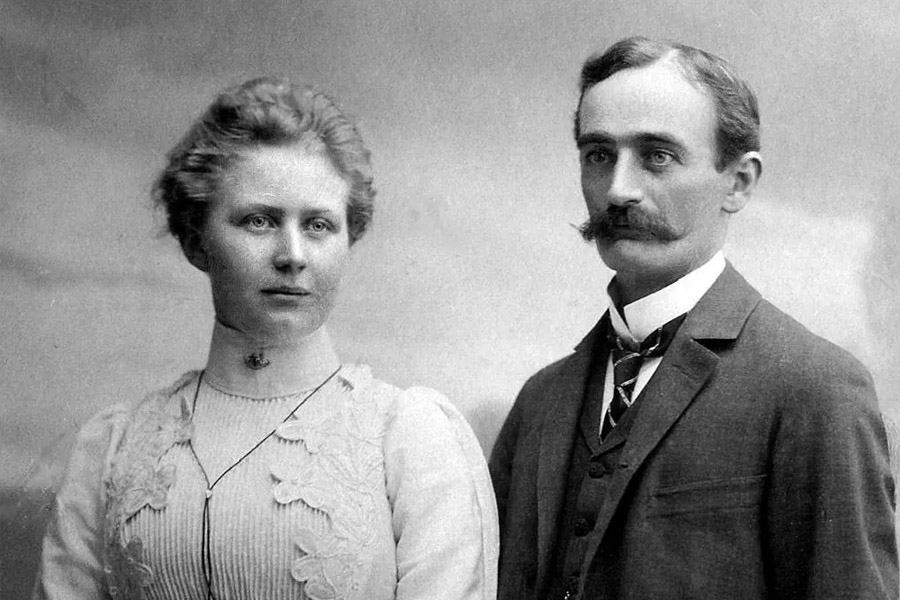
Basic Information
| Field | Details |
|---|---|
| Full Name | Christian Johannes Trump |
| Also Known As | Johannes Christian Trump; Johannes Trump; historical variants include Drumpf/Drumpft |
| Born | June 1829 (commonly recorded as 25 June 1829) |
| Birthplace | Kallstadt, Palatinate (then Kingdom of Bavaria; now Rhineland-Palatinate, Germany) |
| Died | 6 July 1877 |
| Place of Death | Kallstadt, Palatinate |
| Age at Death | About 48 |
| Occupation | Winzer (vintner, winegrower) |
| Religion | Evangelical (Protestant) |
| Residence | Kallstadt, a winegrowing village in the Palatinate |
| Spouse | Katharina Barbara Kober (1836–1922) |
| Marriage | 29 September 1859 (Evangelical church, Kallstadt) |
| Children (commonly listed) | Katharina (c.1861–?), Jakob (30 Sep 1863–1938), Sybilla Luisa (c.1865–?), Friedrich/Frederick (14 Mar 1869–30 May 1918), Elisabetha (c.1873–c.1960), Barbara (c.1876–c.1913); additional children sometimes appear in local genealogies |
| Parents | Johannes (or Johann) Trump (c.1789–?), Susanna Maria Bechtloff (c.1804–?) |
| National/Political Context | Subject of the Kingdom of Bavaria (Rhenish Palatinate) |
| Notable Descendant | Grandfather of Donald J. Trump via his son Friedrich/Frederick Trump |
Roots in the Palatinate: A Life Among Vines
A youngster was born into Palatinate rhythms—prune, tie, harvest, rest—in 1829 in Kallstadt, a wine community. Christian Johannes Trump, a winzer like the region’s Riesling, was sculpted by soil, weather, and agriculture’s gamble. The Palatinate, once part of Bavaria, was a western frontier that relied on the Rhine for trade and church parish books for continuity. These pages record Trump baptisms, marriages, and burials, a family ledger planted like a vine trellis throughout generations.
Kallstadt’s economy in the mid-19th century was the careful arithmetic of smallholders. Vintners like Christian balanced seasonal labor with household needs, trading time and toil for the promise of a good harvest. He is recorded in local registers as a winzer—an identity that was as much a communal role as a profession.
Marriage and Household
On 29 September 1859, Christian married Katharina Barbara Kober, also of Kallstadt. Their union reflects a common pattern of the region: Evangelical families interwoven through vineyard lanes, godparents, and shared labor. Over the next 17 years, the household expanded. Between about 1861 and 1876, church registers and genealogies list multiple children—sons to carry barrels and daughters to run kitchens that fueled fieldwork—an ordinary yet demanding rural existence.
The home Christian and Katharina kept was neither grand nor destitute; it was typical of Palatinate vintners: modest plots, seasonal cashflow, and a reliance on extended kin. In this matrix of vines and kinship, one child would ultimately carry the surname far beyond Kallstadt.
Children and Lines of Descent
The following table summarizes children commonly listed in the family registers and genealogies. Variations in spelling and precise dates occur due to differences in transcription and record-keeping.
| Child | Birth–Death | Notes |
|---|---|---|
| Katharina Trump | c.1861–? | Eldest daughter; appears in local genealogical listings |
| Jakob (Jacob) Trump | 30 Sep 1863–1938 | Remained in the Kallstadt area; associated with viticulture |
| Sybilla Luisa Trump | c.1865–? | Recorded in family trees; details vary |
| Friedrich (Frederick) Trump | 14 Mar 1869–30 May 1918 | Emigrated to the U.S. in 1885; barber, hotel/restaurant operator; paternal grandfather of Donald J. Trump |
| Elisabetha (Elisabeth) Trump | c.1873–c.1960 | Recorded in local genealogical compilations |
| Barbara Trump | c.1876–c.1913 | Appears in family trees; limited biographical detail |
Some family summaries mention “at least four sons and four daughters,” indicating that a larger brood may have existed than commonly enumerated online. What’s certain is the presence of Friedrich—later styled Frederick—whose emigration would stitch Kallstadt into the fabric of American family lore.
Work, Wealth, and Widowhood: The Final Years
Christian lived amid agricultural peril. The 1870s saw political reorganisation (a unified Germany in 1871) and rural stresses like crop variability, price variations, and rising costs. He died at Kallstadt at 48 in 1877. Family histories reveal a long sickness and medical expenses. Such expenses might devastate a vintner’s family like a late frost. Katharina maintained the family after his death, with her children running vineyards or exploring outside the Palatinate like Friedrich.
This context matters for understanding later migrations. Frederick Trump’s departure for the United States in 1885, at age 16, fits a common pattern: younger sons from modest rural households seeking fortunes abroad. It also reflects a family that, after Christian’s death, had limited means to distribute among multiple children.
Names and Variants: Trump, Drumpf, and the Paper Trail
Records from Kallstadt show a fluidity of spelling typical of the 18th and 19th centuries. Christian appears as “Christian Johannes Trump,” “Johannes Christian Trump,” and simply “Johannes Trump.” In older lines and in some historical commentary, the surname appears with variants like Drumpf or Drumpft. Such variations are not unusual in German parish registers, where clerks rendered names phonetically or according to shifting conventions. By Christian’s lifetime, Trump is the form most commonly associated with the family in Kallstadt.
A Short Timeline
| Year | Event |
|---|---|
| 1829 | Birth in Kallstadt, Palatinate (then Kingdom of Bavaria) |
| 1859 | Marriage to Katharina Barbara Kober on 29 September (Evangelical church, Kallstadt) |
| 1861–1876 | Births of multiple children, including Jakob (1863) and Friedrich (1869) |
| 1877 | Death in Kallstadt on 6 July; family faces financial strain |
| 1885 | Son Friedrich emigrates to the United States at age 16 |
| 1918 | Death of Friedrich (Frederick) Trump in the United States |
Place and Legacy
Imagine a vintage life for Christian Johannes Trump. He trimmed vines that had been tended by centuries before him, but journalists a century later would arrive to find the roots of a modern political dynasty. He left a humble legacy of marriage in 1859 and children who crossed continents, not public office or wealth. Friedrich brought the line from a Palatinate hillside to New York’s streets and headlines. That story—steady, rural, Evangelical, and Palatinate—begins with Christian and his family.
FAQ
Who was Christian Johannes Trump?
A 19th-century vintner from Kallstadt in the Palatinate, he was the father of Friedrich (Frederick) Trump and a key ancestor in the Trump family line.
When and where was he born and when did he die?
He was born in June 1829 in Kallstadt and died there on 6 July 1877.
What was his occupation?
He was a winzer, the German term for vintner or winegrower, working the vineyards that defined Kallstadt’s economy.
Who was his spouse?
He married Katharina Barbara Kober on 29 September 1859 in the Evangelical church at Kallstadt.
How many children did he have?
Records commonly list six to eight children; among them were Jakob, Katharina, Sybilla Luisa, Friedrich (Frederick), Elisabetha, and Barbara.
He is Donald Trump’s great-grandfather through his son Friedrich (Frederick) Trump.
Did Christian Johannes Trump emigrate to the United States?
No, he remained in Kallstadt throughout his life; his son Friedrich emigrated in 1885.
Was the family name Drumpf?
Historical records show variant spellings, including Drumpf/Drumpft, but Trump is the form chiefly associated with the Kallstadt family in Christian’s lifetime.
Why did Friedrich (Frederick) leave Germany?
Economic opportunity and the circumstances of a modest vintner’s household after Christian’s death influenced his emigration in 1885.
What religion did the family practice?
They were Evangelical (Protestant), as reflected in Kallstadt church entries for marriages and baptisms.
Building Search Visibility Without Chasing Magic Tricks
How High Performing Airports Keep The Chaos Moving
When Your Smile Is Telling You More Than You Think
How To Turn A Sports Room Into A Personal Hall Of Fame
How Smart Water Management Helps Concrete Outlast The Weather